A planted part of a water system
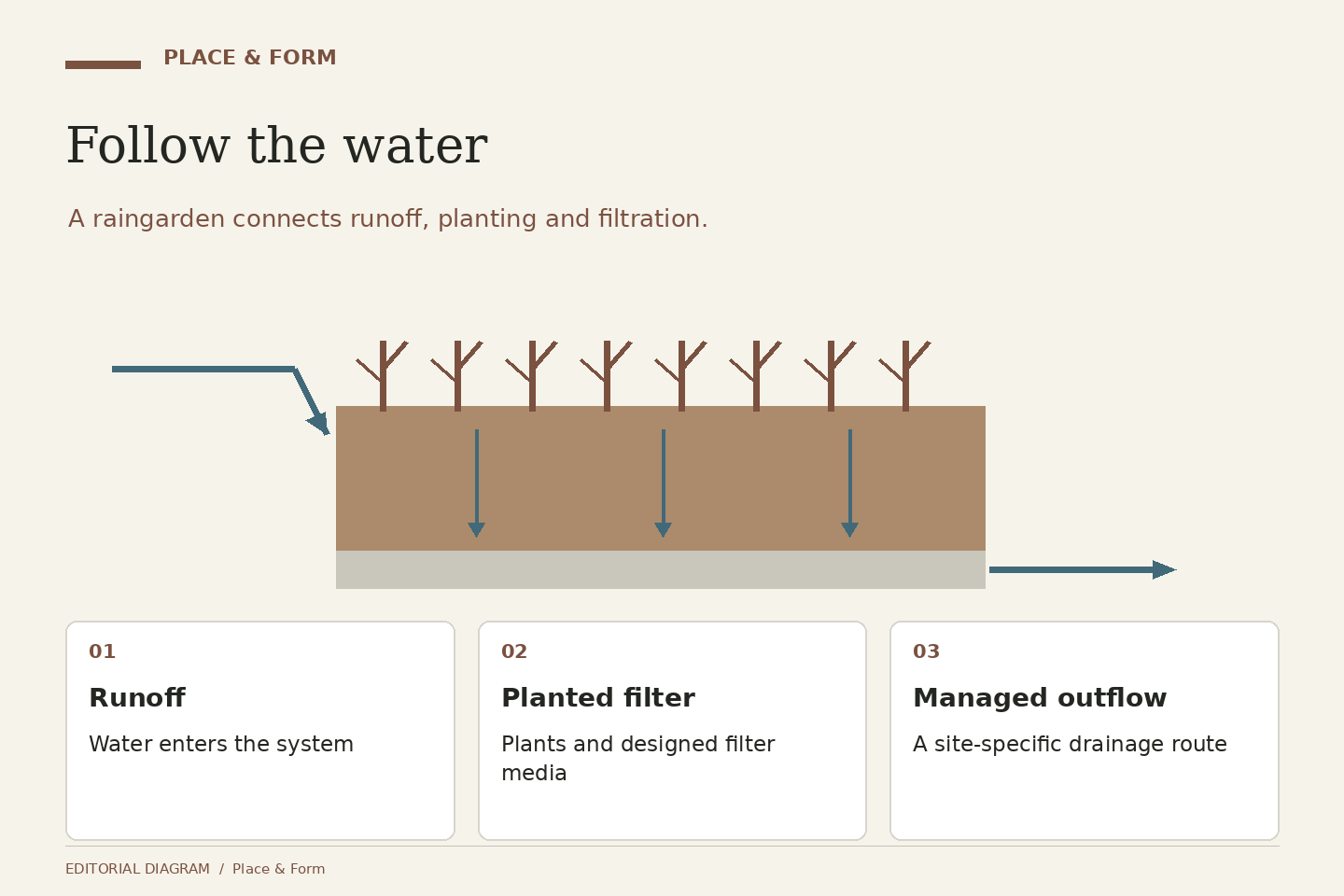
A low patch of garden and a raingarden are not automatically the same thing. Melbourne Water describes raingardens as designed systems that receive and treat stormwater through planting and filter media. They bring a functional water process into the landscape.
Their visual appeal can help make that process legible, but the planting is only one part. The source of the water, the soil or filter layers and the route taken by excess flow all belong to the design.
Trace the water first
Start a discussion with a designer by identifying where runoff comes from and where it currently goes. A roof downpipe, paved area or tank overflow creates a different starting condition. Melbourne Water’s home raingarden guidance describes several arrangements, rather than one universal detail.
Do not improvise a connection near building foundations or assume that every site should allow water to soak into the ground. Site conditions and local requirements determine the appropriate design. The useful homeowner task is to assemble information and ask clear questions, not to substitute a sketch for drainage advice.
Design for the dry view as well
The garden will be seen between rain events. Consider its form from the house, the path and the street when water is not moving through it. A defined edge or a visible inlet can explain its purpose without turning it into a display of engineering.
Plant selection needs to respond to the actual conditions, including periods without water. Ask the designer how the proposed plants suit the system and what establishment care they need. A planting list borrowed from a photograph says little about the conditions beneath it.
Make maintenance possible
Melbourne Water’s guidance includes removing litter and sediment and maintaining the planted system. Leave access for that work. A beautifully enclosed garden can become inconvenient if the inlet is difficult to inspect or accumulated material cannot be removed easily.
Ask for a simple maintenance plan and a drawing showing the intended water route, including overflow. Keep both with the property records. The most convincing raingarden is one whose appearance, water function and upkeep have been considered together from the beginning.