Two lives in one brief
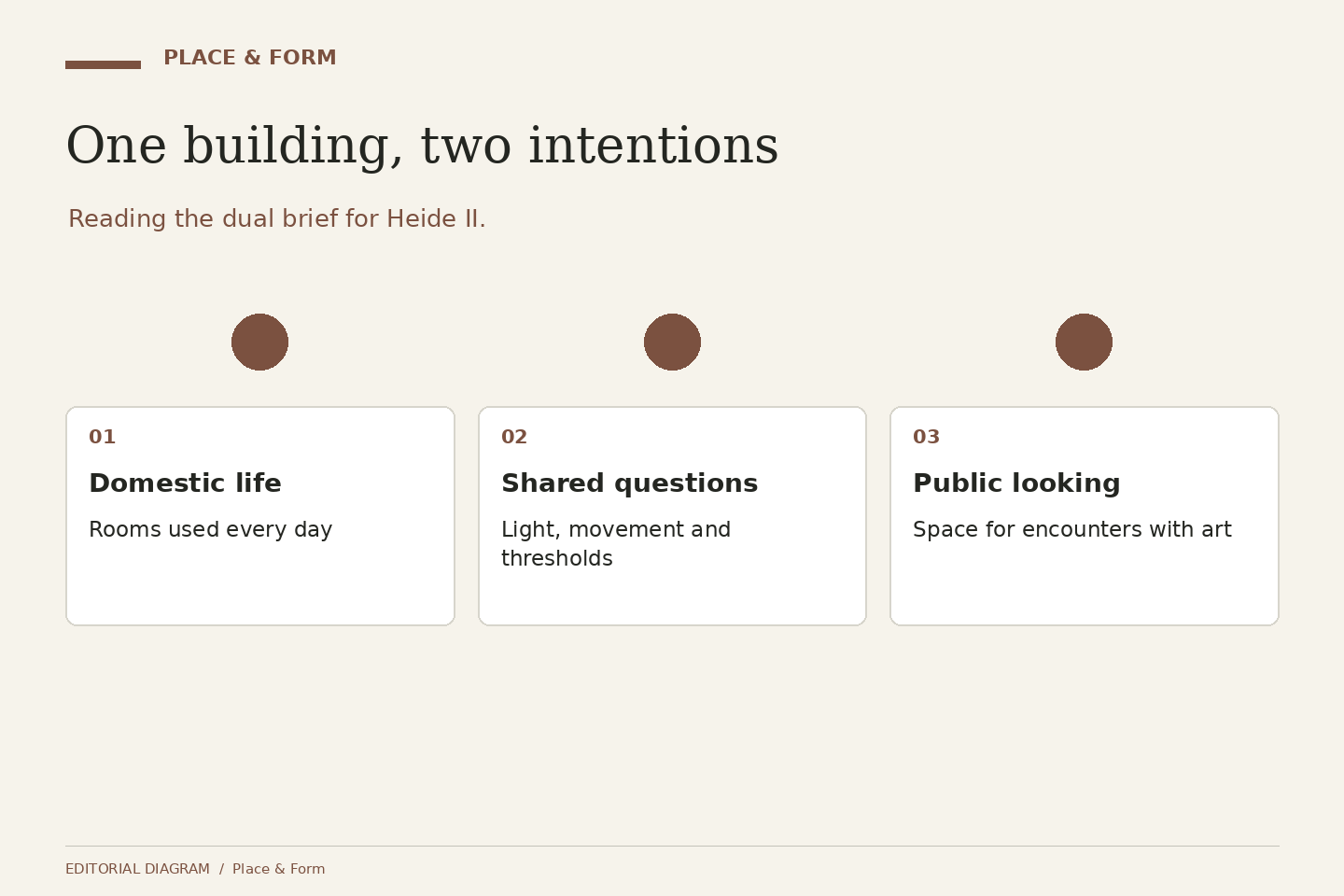
A house normally begins with the needs of its occupants. Heide II carried another prospect from the start. Heide’s account of the building describes John and Sunday Reed’s 1963 commission to McGlashan and Everist as a home intended eventually to become a gallery. Domestic life and public looking were therefore part of the same architectural problem.
This is a productive lens for a visit. Rather than treating the building as a neutral container for art, consider how a room might accommodate both everyday occupation and sustained attention to an object.
Read the thresholds
A doorway does more than connect rooms. It controls the moment when another space becomes visible, how a person approaches a wall and whether a view unfolds all at once. In a home, these choices shape privacy and movement. In a gallery, they can shape the sequence in which works are encountered.
At Heide II, use the original dual brief as a question rather than a ready-made explanation for every detail. Pause at a threshold and notice what it frames. Then move through it and see how the relationship changes.
Bring the landscape into the reading
Heide places its buildings within a larger garden and park setting. A view out can interrupt the concentrated act of looking at art, or give it a useful pause. Light also makes a room change through the day, so a photograph records only one condition.
For visitors interested in their own homes, the transferable idea is modest: consider where the eye can rest between objects. A collection does not need to occupy every available wall. An opening, an empty surface and a piece of art can give each other definition.
Visit the building you can actually enter
Consult Heide’s current visitor information before travelling. Exhibitions and access to individual spaces change, so do not plan around a work shown in an old interior photograph.
Take time to distinguish the building’s original intentions from the way it is used today. That gap is part of its interest. Heide II invites a question that extends well beyond a museum: how can a room serve the people living in it now while remaining generous enough for another life later?