A landscape with a human presence
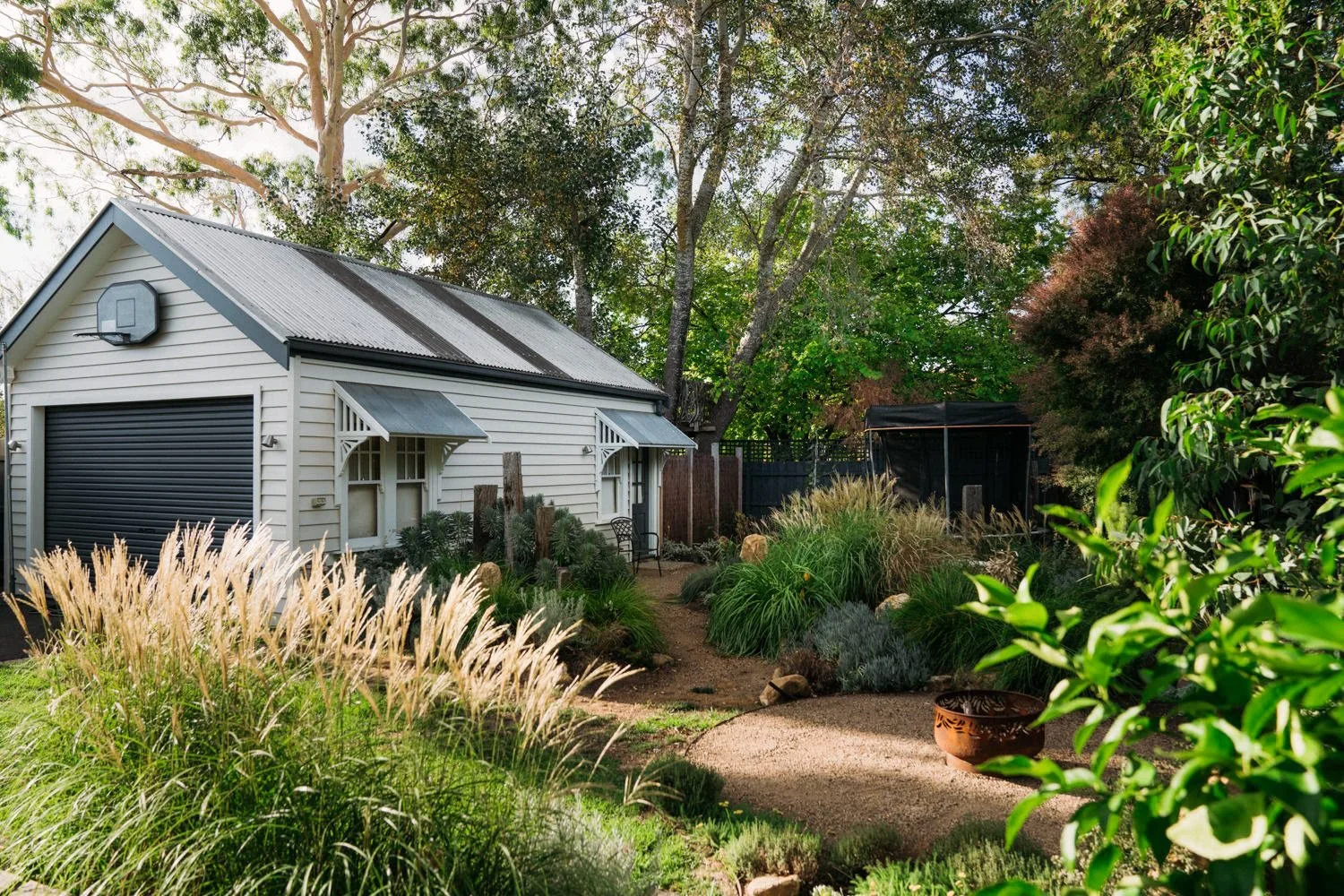
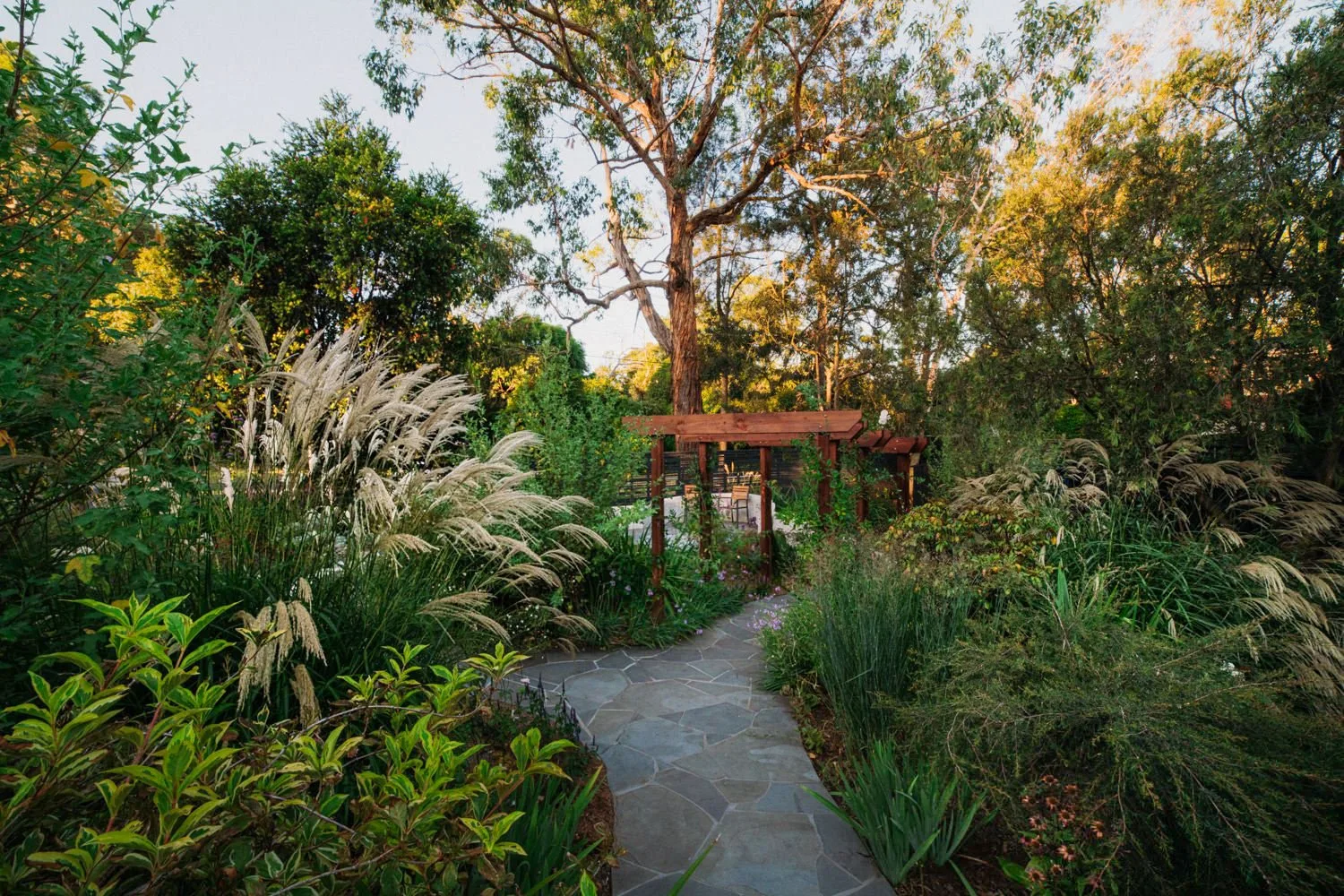
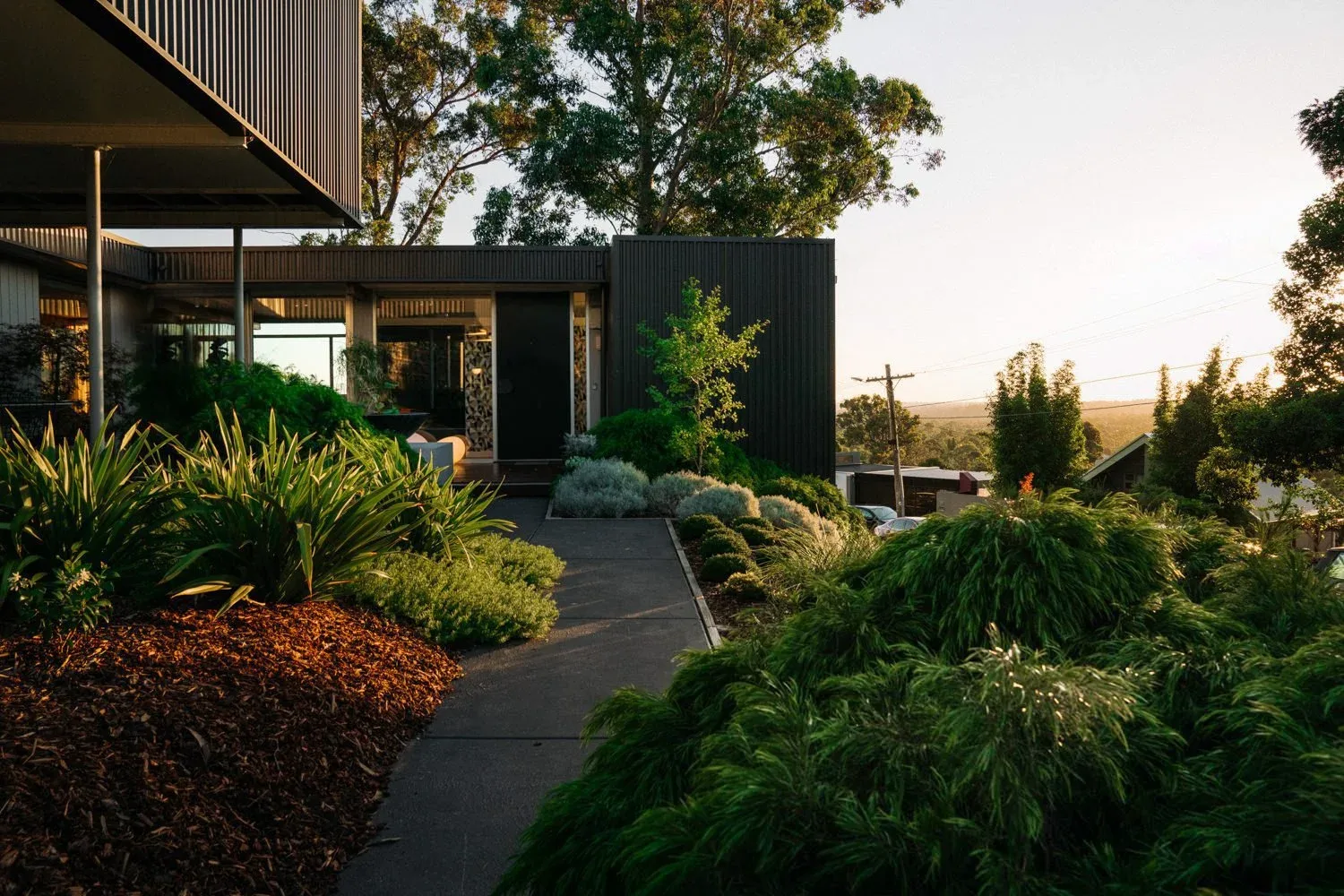
The exterior photograph begins with a path between planted beds and a dark-framed building. Rounded shrubs, upright leaves and warmer foliage create distinct layers, while the house provides a strong horizontal edge. The garden appears carefully composed, but the wider collection gives it a more personal dimension.
In Jaccob McKay’s Heathmont Healing Garden series, the landscape is accompanied by pictures of a drawing, a person examining flowers and hands working close to the ground. These scenes make the garden’s ongoing life visible. Its form is only one part of the subject.
From the drawing to the flower
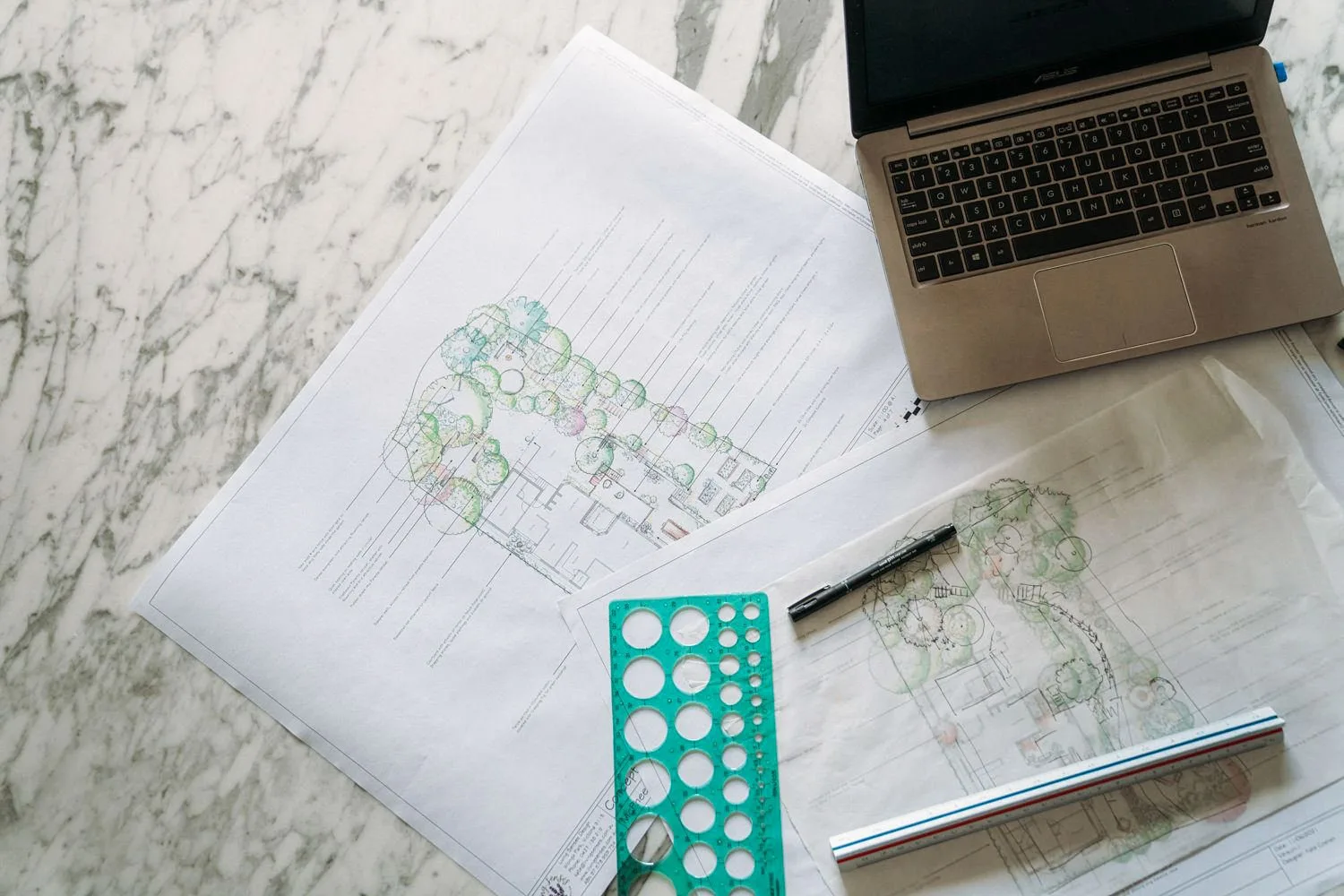
The plan photograph introduces a different kind of image: pale paper, fine lines and colour marks on a table. It suggests the design work behind the planted space without pretending that the drawing and the finished garden are identical. One is a representation; the other is a living arrangement of materials.
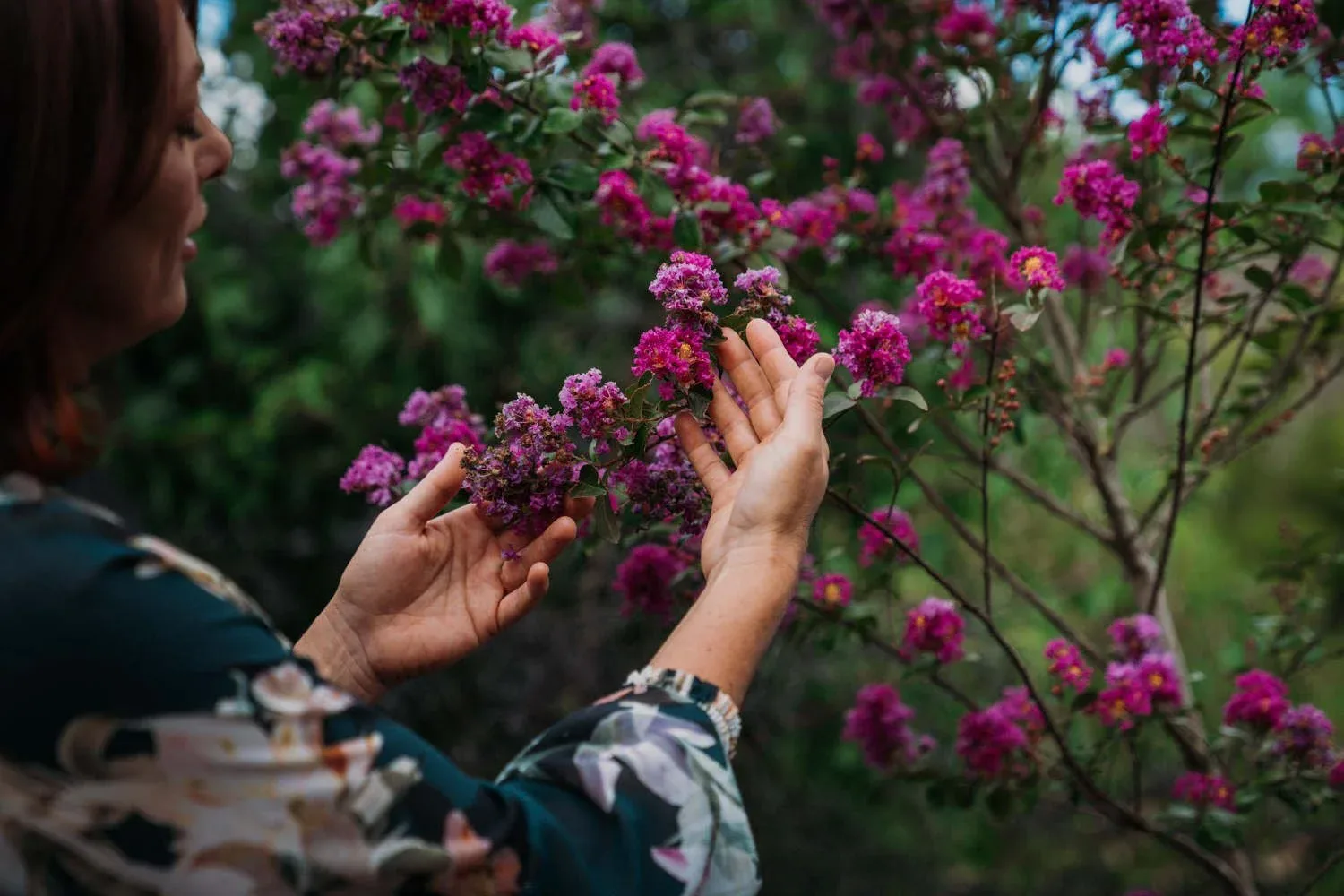
The close view of flowers brings attention back to the garden itself. A hand gives the blooms scale and introduces touch into a medium that can otherwise make landscapes feel distant. The photograph is specific and modest, concerned with one small encounter rather than the whole garden at once.
The work that continues
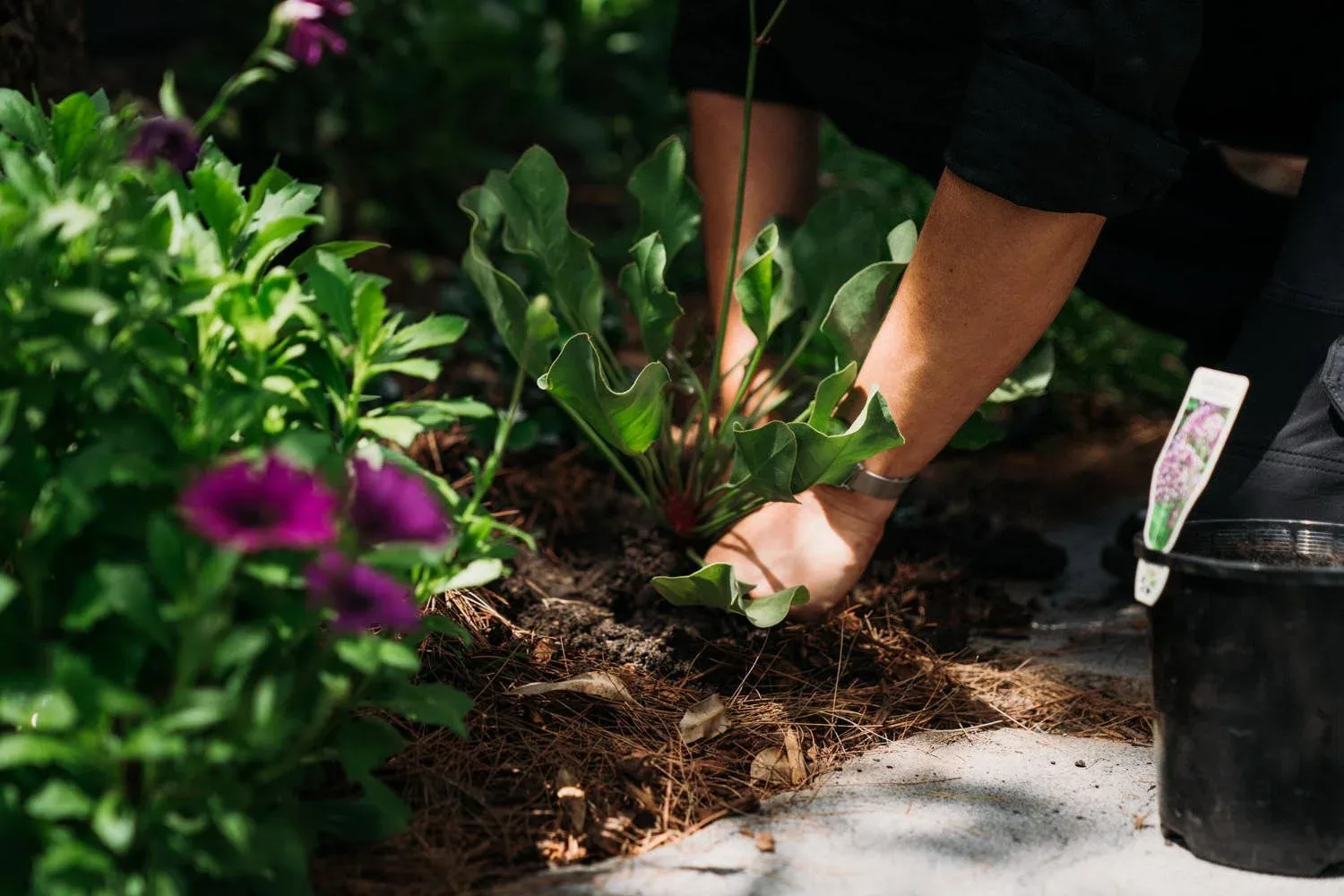
A further image shows planting being tended at ground level. Leaves partly obscure the scene, keeping the camera close to the same environment as the person working. It is a useful counterpoint to the composed exterior view: the garden has an appearance, but it also has a daily life of attention and change.
The original photographic collection documents that relationship for Living Senses Garden Design. The project’s title belongs to the collection; the images themselves speak most clearly about occupation, care and the material presence of plants. They show a designed landscape continuing beyond the moment of its completion.