Read the words beside the tree
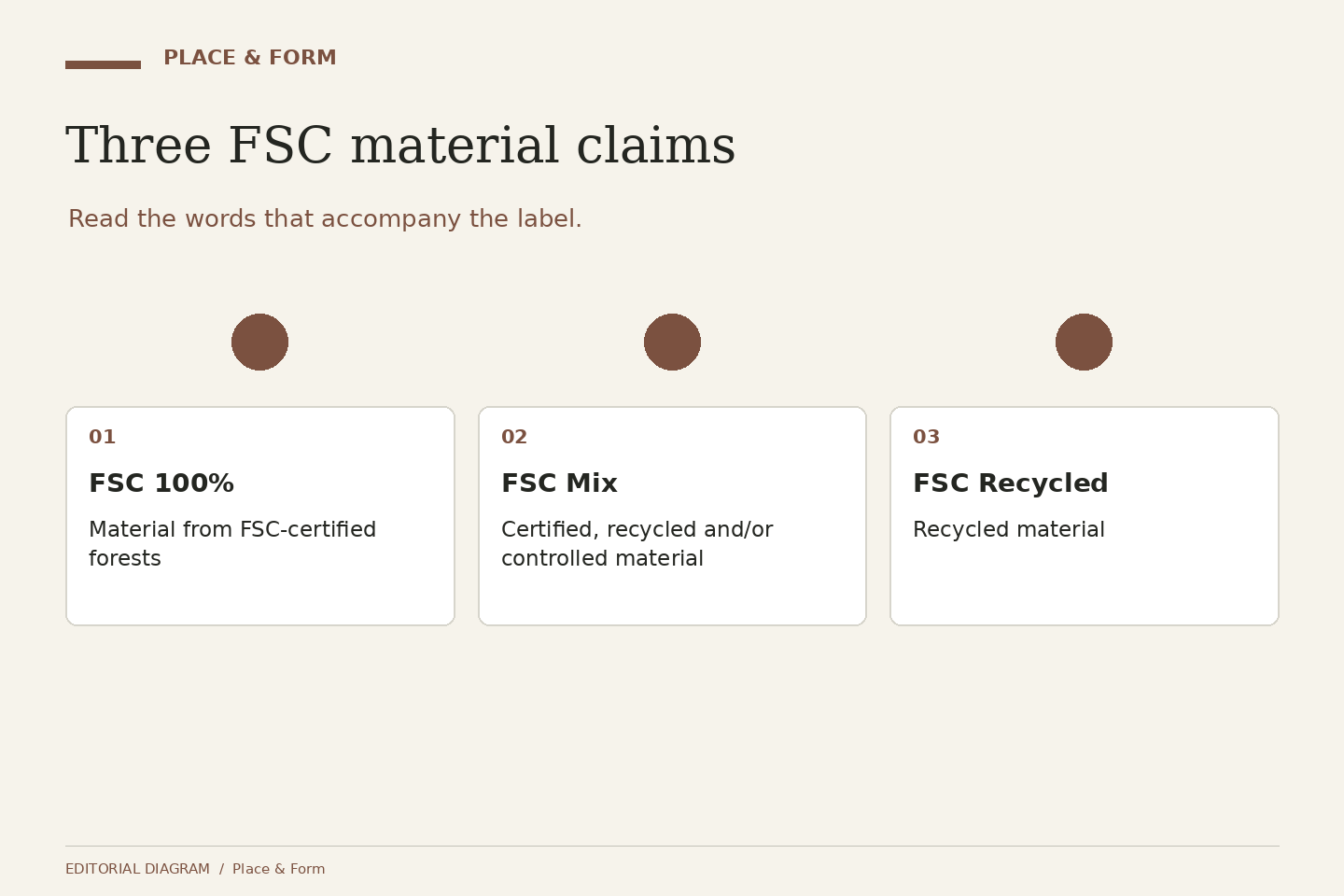
The FSC logo is familiar on packaging, paper and timber products, but the accompanying words matter. FSC’s label guide distinguishes three main claims: FSC 100%, FSC Mix and FSC Recycled. They should not be read as interchangeable badges.
FSC 100% identifies material from FSC-certified forests. FSC Recycled identifies recycled material. FSC Mix can combine FSC-certified material, recycled material and controlled wood; controlled wood is not the same as FSC-certified wood. That distinction is the useful first step when comparing two apparently similar products.
Check what the label applies to
An object may arrive in certified packaging without the same claim applying to the object itself. Before drawing a conclusion, identify the product or component covered by the label. Ask the supplier for the relevant product information if the wording on a listing is ambiguous.
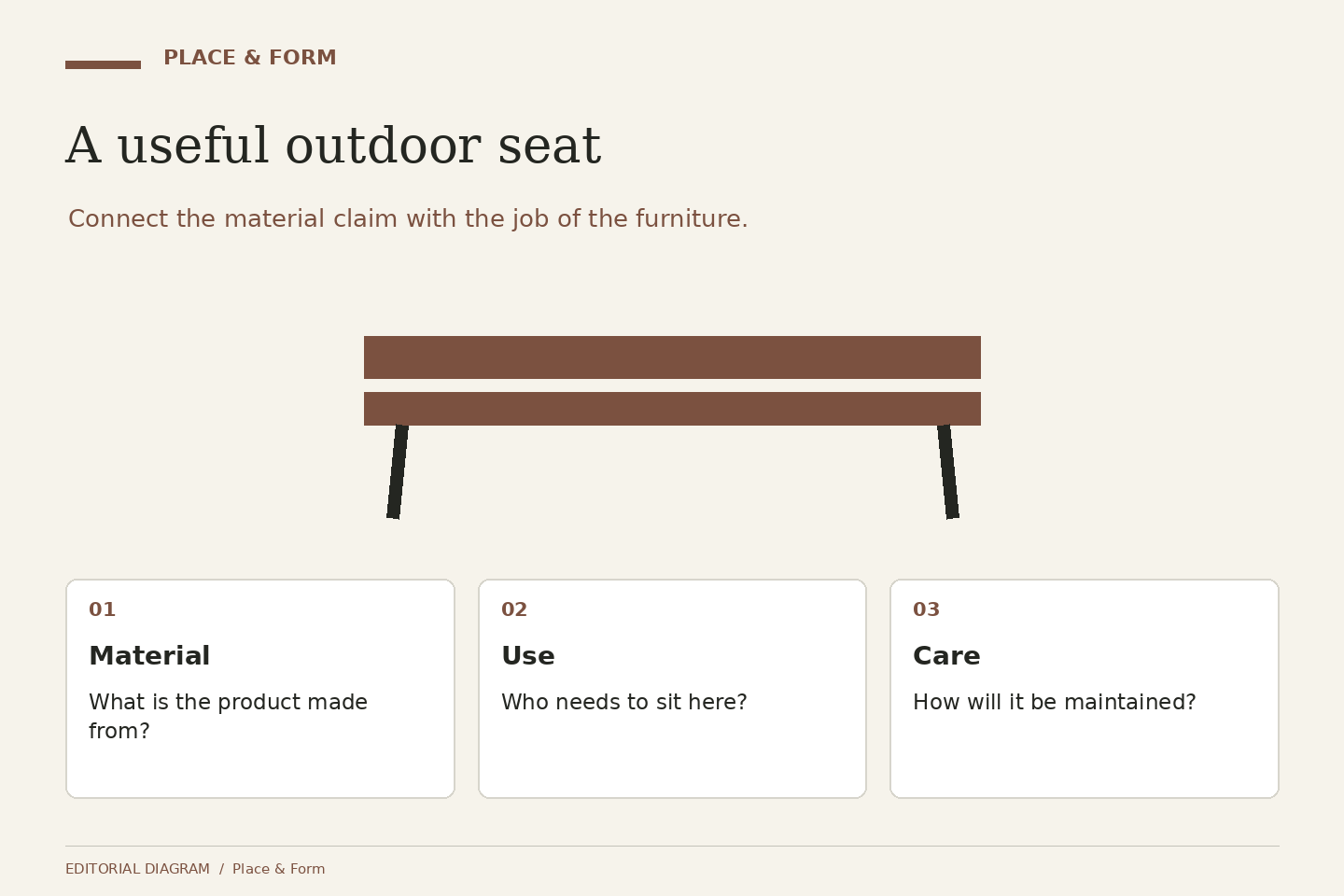
This is particularly useful for furniture made from several materials. A timber frame, upholstered seat, metal fitting and delivery carton are separate things. One clear claim about one of them should not silently expand into a claim about all of them.
Keep other questions in view
A sourcing label does not, on its own, tell you whether a chair is comfortable, a cabinet can be repaired or a desk will suit a future room. Those are additional design and purchasing questions.
Look at the joints, finish, spare parts and care information. Ask how damaged components can be replaced, whether the piece can be disassembled and what happens if it needs to move through a narrow doorway. These practical details can affect how long the object remains useful in your life.
Make a small evidence record
For a considered purchase, keep the product name, relevant certification claim and supplier’s care information together. A photograph of the actual label is more useful than remembering that the website looked environmentally responsible.
Use FSC Australia and New Zealand’s explanation to resolve the label wording, then assess the rest of the object on its own evidence. The aim is a more precise decision: understanding what a certification does establish while continuing to examine the qualities it was never intended to describe.