More than a distant outlook
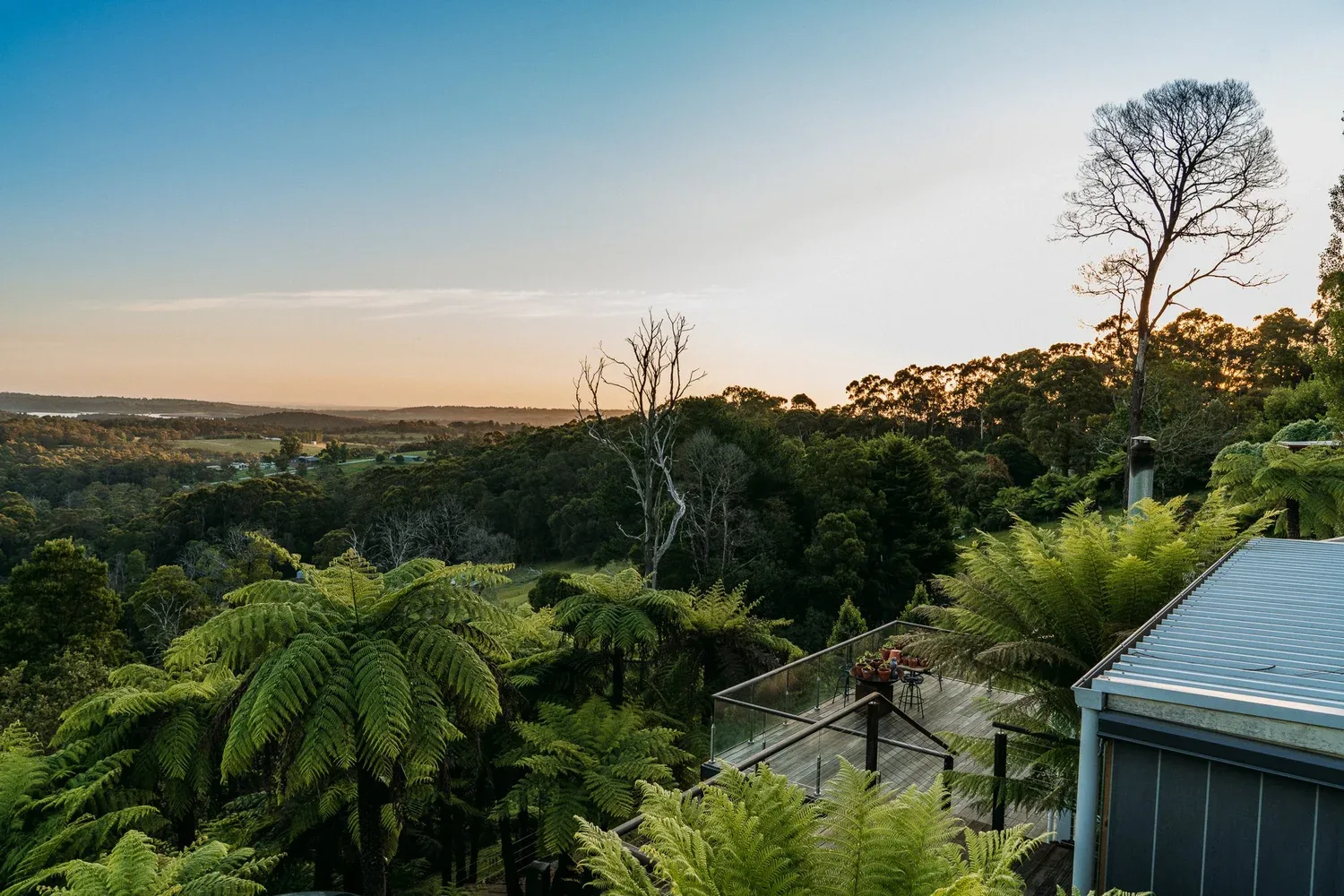
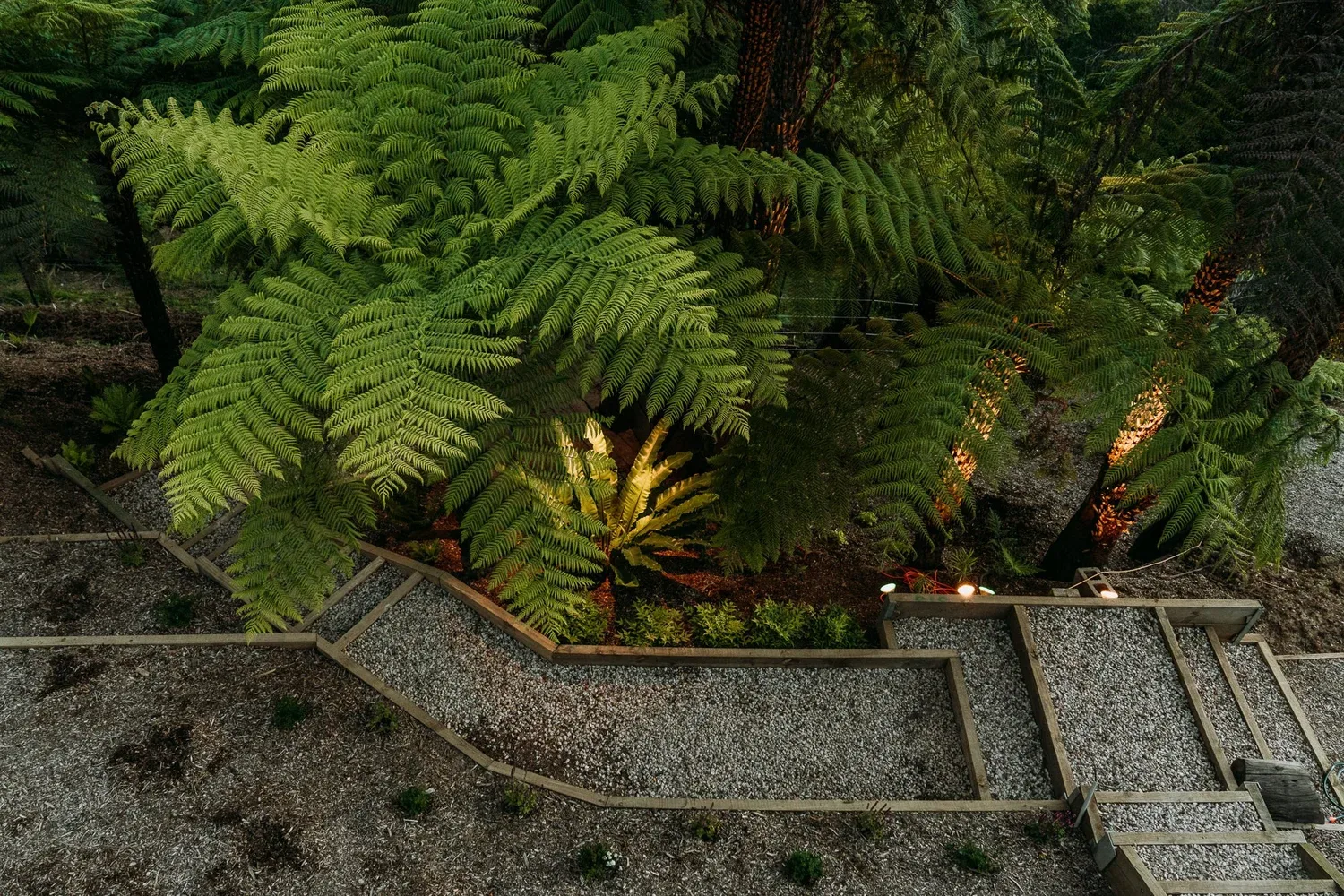
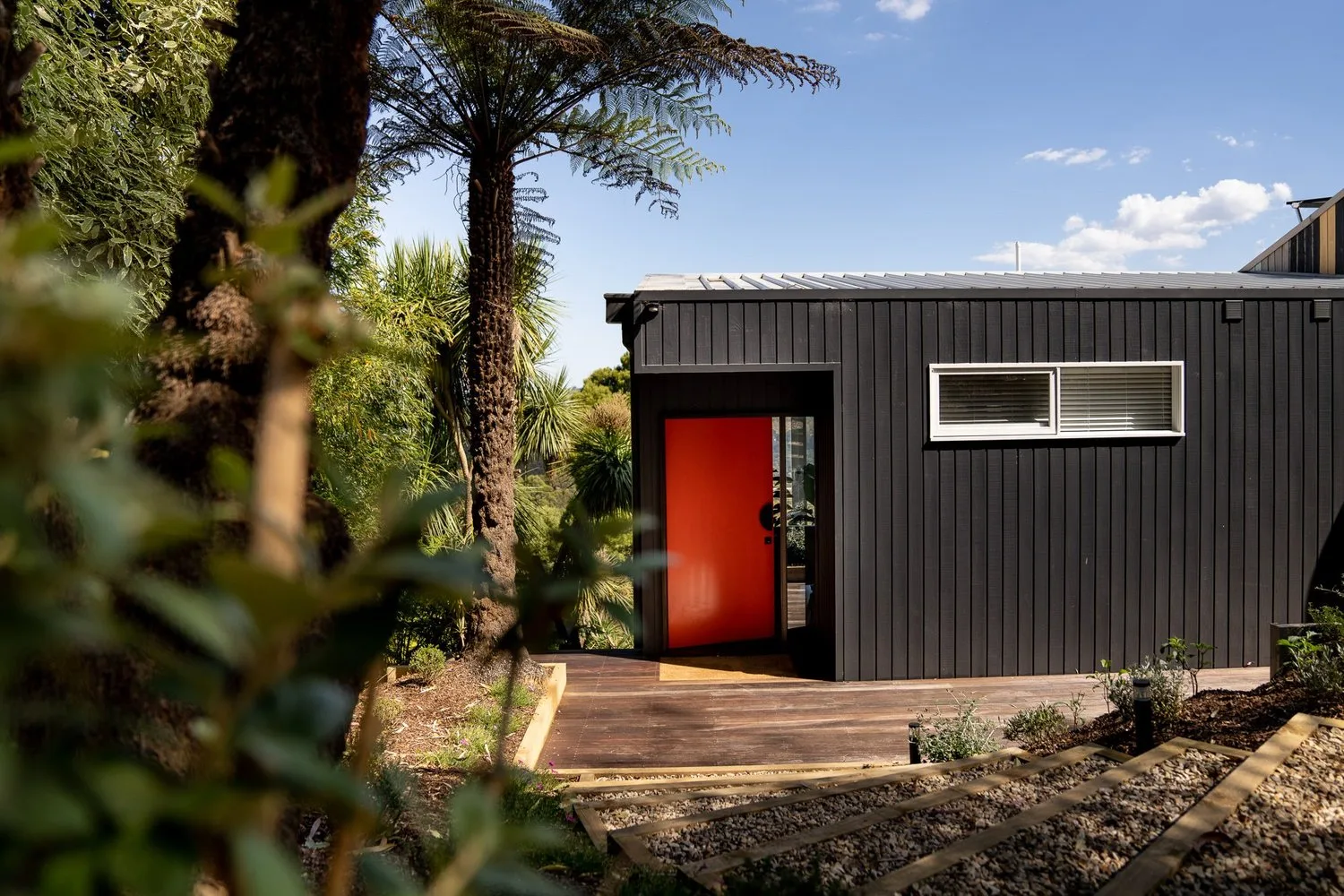
A long view can dominate a house so completely that the space immediately around it becomes an afterthought. Cloud View, photographed in Menzies Creek, offers a more layered relationship with its setting. Nearby ferns, the dark surface of the building and the distant hills each have a place in the composition.
The result is a useful example of landscape working at several distances. The horizon provides openness, but it is the garden beside the house that gives the foreground its texture and scale.
A red door in a restrained palette
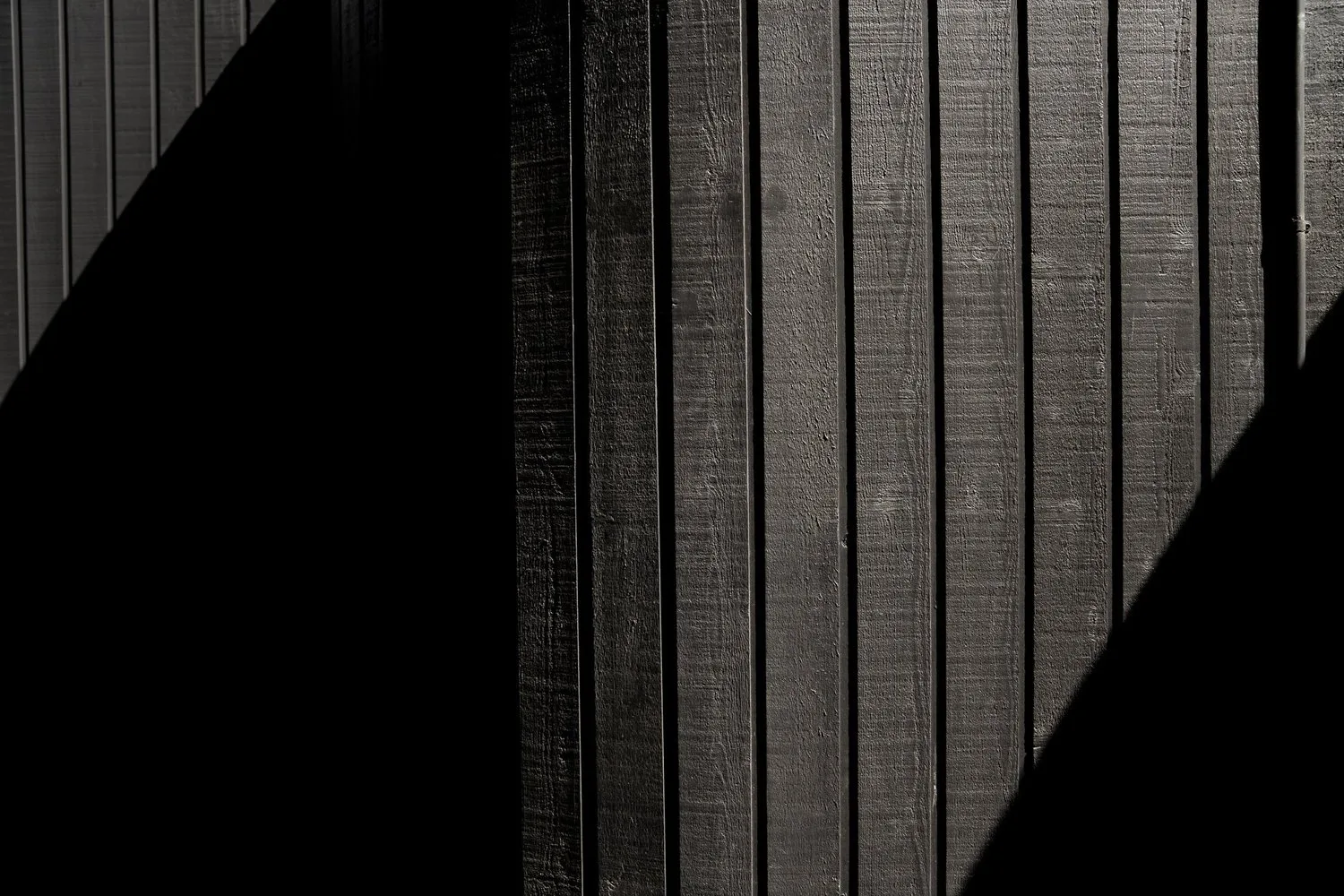
The dark cladding sits comfortably beside foliage because it leaves room for the varied greens around it. Its vertical boards still create a precise, repeated pattern. Tree fern fronds supply a looser counterpart.
Against this background, a red door has considerable presence. A small amount of saturated colour can establish an entrance without spreading across the whole building. The door is memorable because the surrounding palette gives it space.
What the close views contribute
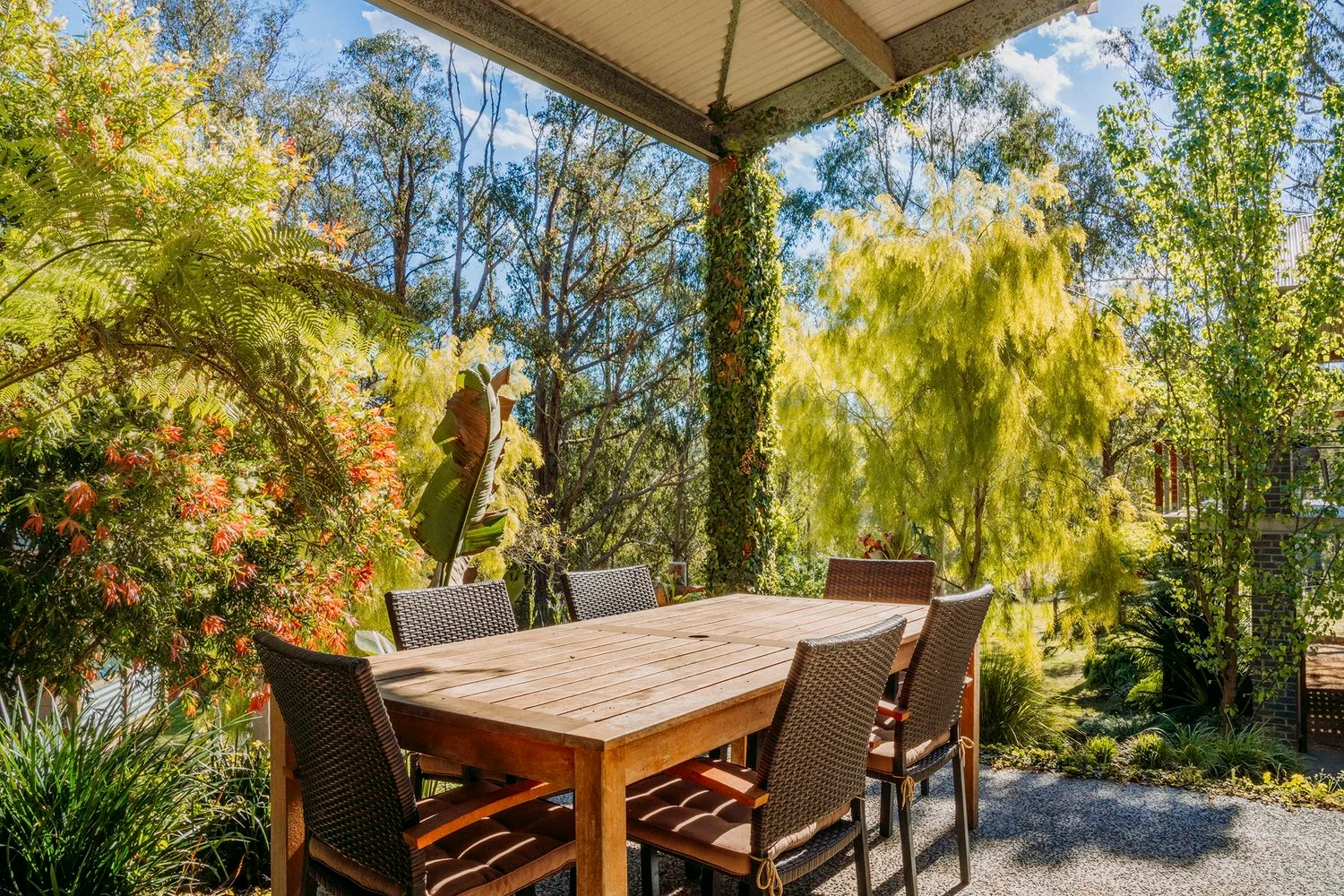
The closer photographs in the Cloud View Garden collection explain qualities that a panoramic image would miss: the interval between boards, the fine structure of fern fronds and the meeting of planting with built edges.
For readers planning a garden around an outlook, the distinction matters. A landscape needs to work on an ordinary day when attention is on a doorway or path, as well as on the occasion when everyone stops to look at the view. Cloud View’s photographic record makes both scales visible.
This feature is based on the commissioned project imagery. It does not identify plant species or assess the garden’s maintenance, water use or performance over time.
Photography and publication
Photography by Jaccob McKay. This feature draws on the credited project archive and editorial interpretation; it is not a commissioned independent review.