Two meanings of texture
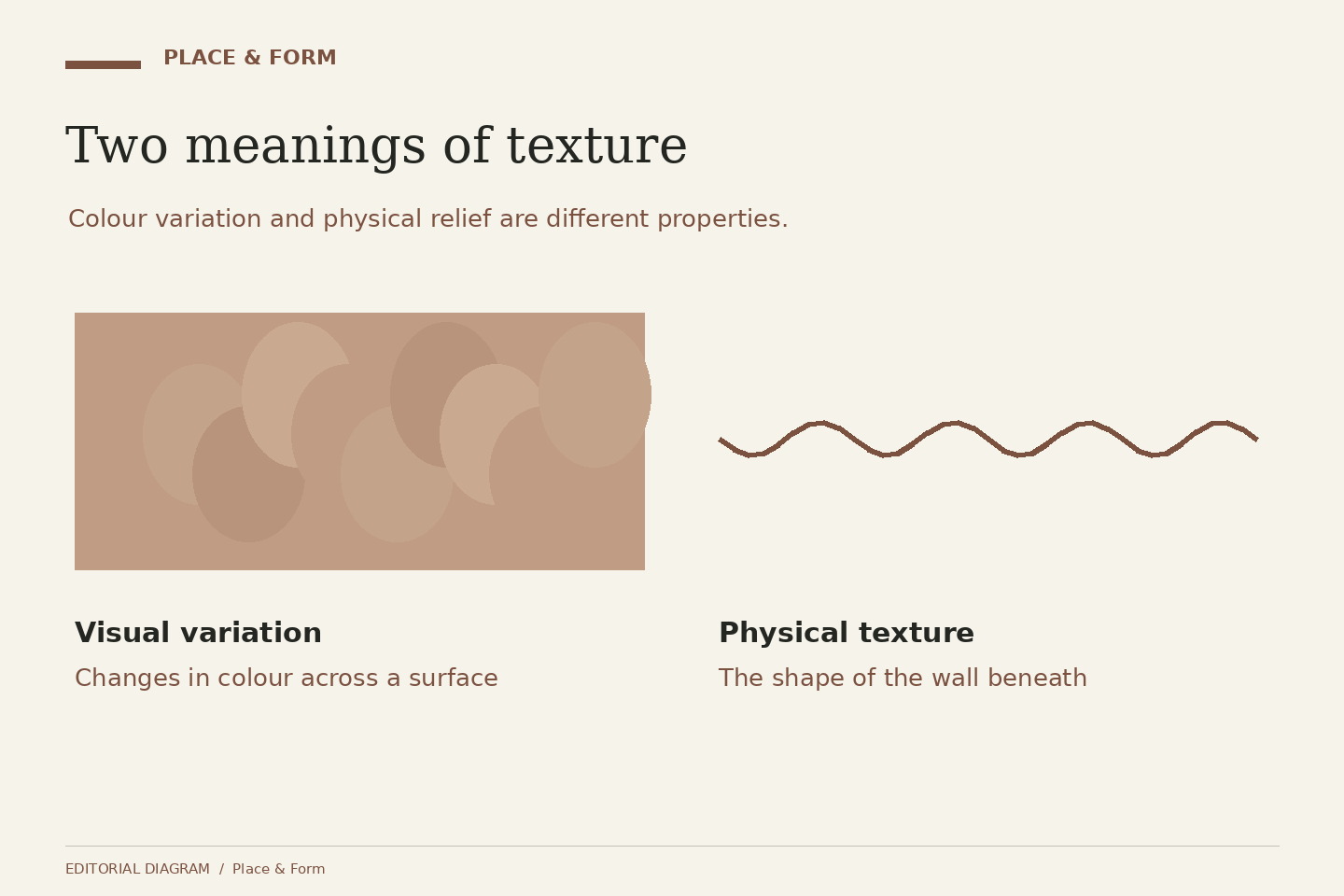
Interior photographs often use ‘texture’ to describe both a rough surface and a finish with visible colour variation. The distinction matters when choosing limewash. Bauwerk’s explanation says its paint can create a mottled visual effect while leaving the underlying physical texture of the wall unchanged.
A smooth wall with moving colour will still be a smooth wall. A rough wall does not become flat simply because the finish appears soft in a photograph. Establish which quality you actually want before choosing a colour.
Test the wall and the light
Bauwerk notes that colour, application and the surface all influence the appearance. A small digital swatch cannot represent that combination. Start with the manufacturer’s guidance for the existing substrate and prepare a sample using the proposed system.
Look at it in the room at several times of day. Side light may reveal surface irregularities that are barely visible under even lighting. Place the sample near the materials it will meet, especially white trim, timber and large pieces of furniture. A finish is experienced through those relationships, not in isolation.
Choose the amount of variation
A pale wall and a darker wall can produce very different impressions even when both use limewash. Bauwerk describes the effect in its palest colours as subtler. That is a reason to test the desired degree of movement, rather than choosing a product because it belongs to a familiar style category.
Decide whether the wall should be a quiet background or a noticeable surface. If art, patterned upholstery and strong joinery already carry the room, a restrained finish may be the more useful choice. If the room is spare, more visible variation may give the large wall a role.
Ask about life after application
Before ordering, ask how the proposed finish should be cleaned, maintained and repaired in that particular location. A hallway, bedroom and splash-prone area create different expectations. Follow the current product and surface guidance rather than assuming that every limewash product behaves identically.
Keep the colour, batch and application information after the work is complete. The best sample is not merely the one that looks attractive on decision day. It is the one that helps you understand what the finished wall will ask of the room and of the people caring for it.